
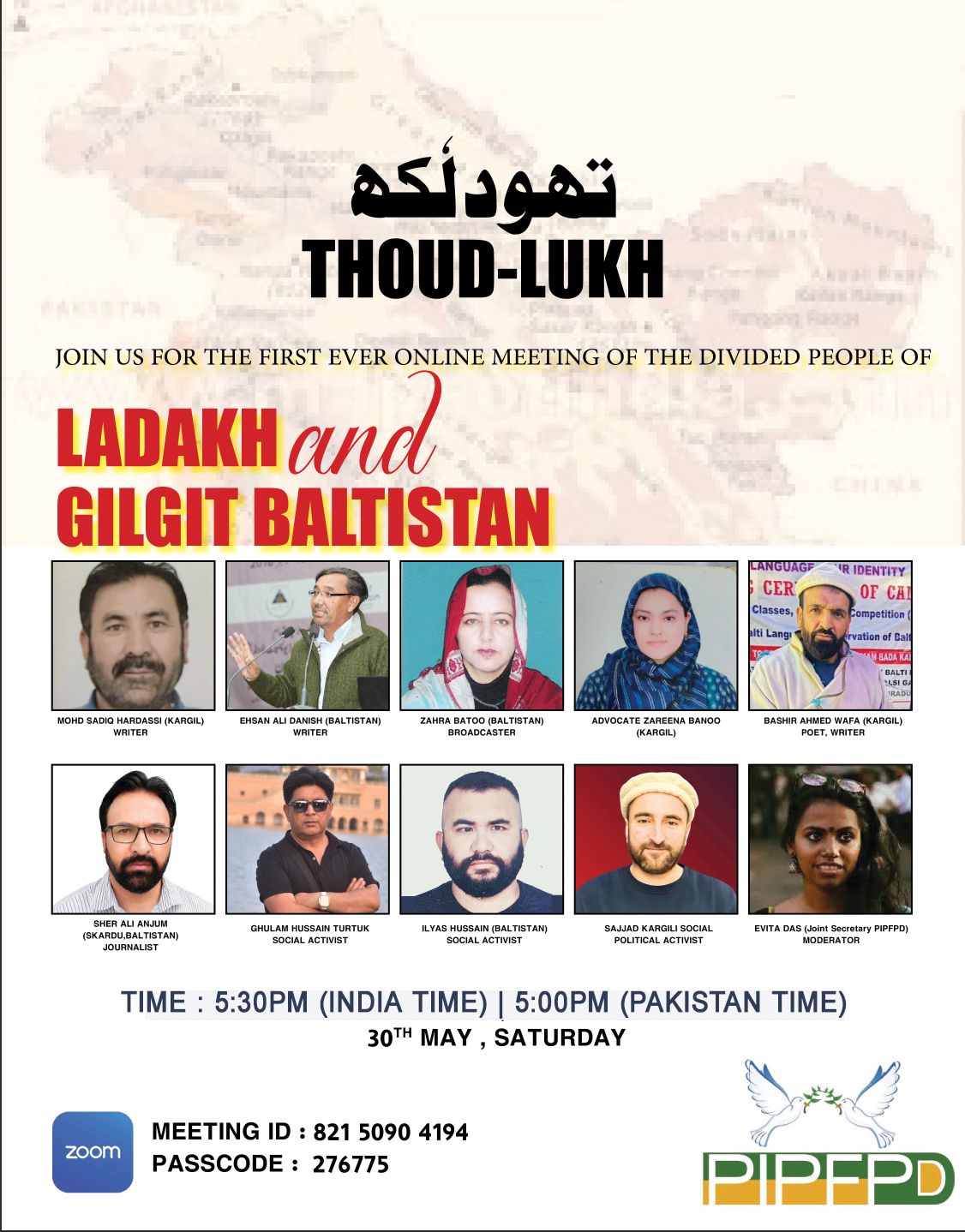
Statement of the divided people of Gilgit-Baltistan and Ladakh
“Ladakh was not just land that was divided. It was people, culture, families and a whole way of living.” Said Sher Ali Anjum described the situation of Gilgit-Baltistan and Ladakh.
This webinar which was held on 30th May was the first ever meeting of the divided people of this region and had over 50 participants, not just from Gilgit-Baltistan and Ladakh but also all over India and Pakistan. As the understanding of a place is deeply connected to the history of the place, the webinar began with discussing the history of Ladakh. This is Thoud-Lukh — a Mulaqat, a meeting, for people living divided lives across Ladakh and Gilgit-Baltistan. A region divided by borders, agreements and constitutions.
This gathering begins with historical and cultural relations in understanding:
- What is Gilgit-Baltistan, historically and politically?
- Who forced them to be divided?
- What are the humanitarian crises and political demands?
Bashir Ahmed Wafa a poet and an activist spoke of the shock and how it affects one’s life. “We were not told anything. We weren’t consulted nor did we have any information how this was going to impact our lives”. The Line of Control, a line that the rest of us do not think about is an everyday reminder and memory of the families divided. Ghulam Hussain shared the story of his father who despite living a few kilometers from his brother could not meet him in their own homes and valleys. Instead they had to meet when they went for the Hajj pilgrimage. Advocate Zarina Banoo urges that “Security and strategic concerns are understandable, but people must be understood separately from terrorism and violence. There has to be a humanitarian approach.”
This border that divides the living divides the dead just the same. People die here in accidents on the narrow roads that are curvy and above deep gorges and are swept across to the other side of the LoC. In most cases, it is buried wherever it lands. Families on the other side are not notified, or are notified too late, or find that returning a body requires routing it 4,000 kilometres around – from Baltistan to Islamabad, from Islamabad to Wagah and then to Ladakh, instead of the few kilometres across the actual border.
The area of Gilgit-Baltistan and Ladakh have always been strategically beneficial but with the partition and wars that came after it have made it an incredibly sensitive area. Advocate Zarina Banoo makes an urge to remember that people and their lives have to be looked at separated from terrorism and violence even when the security concerns remain present.
In the webinar Sajjad Hussain a political activist from kargil consolidated the demands of the Balti people.
- They are recognised in the constitution.
- The visa regimes become more flexible and they are able to meet with their family and loved ones
- The roads are opened up so that movement is made easier not only for trade but the accidents that happen and the dead bodies that succumb to them.
“How good is development when our humanity is being throttled…We live in the most peaceful region on earth and we yearn for peace. The way forward is not wars. Wars do not resolve anything. We, the people of Ladakh and Gilgit-Baltistan, cannot be sacrificed for the politics of two states.”. He says leaving us with much to think about.